Alliander helps over 1,800 customers off the waiting list through grid expansion and smarter power grid use
July 27, 2026
Over the first half of this year, Alliander was able to help over 1,800 high-volume business customers off the waiting list and onto the power grid. Thanks to investments in the power grid and a growing number of solutions for smarter and flexible energy use, the waiting list shrank for the first time. Investments in expansion, maintenance and smarter use of the energy grid totalled €1.1 billion in the first half of 2026.
Our aim is to help as many people and businesses as possible move forward with their plans for the future. The shrinking waiting list shows that the combination of network expansion, smart use of capacity and a regional approach delivers results. This gives businesses renewed scope to invest, grow or decarbonise,’ says Alliander CEO Maarten Otto. ‘At the same time, we are honest about what cannot be done yet. The electricity grid is still under great strain and it is not always possible to do everything all at once. During peak periods, the grid cannot handle demand everywhere. With the new prioritisation rules in effect since 1 July, households and small businesses may face a longer wait for a new or upgraded connection, depending on the available local grid capacity. We recognise the impact this has on people. Behind every application for a connection there is a household with plans for the future or a business that wants to move forward. Together with market parties and our customers, we continue to explore solutions to make the most of the available capacity to give them prospects of a grid connection.
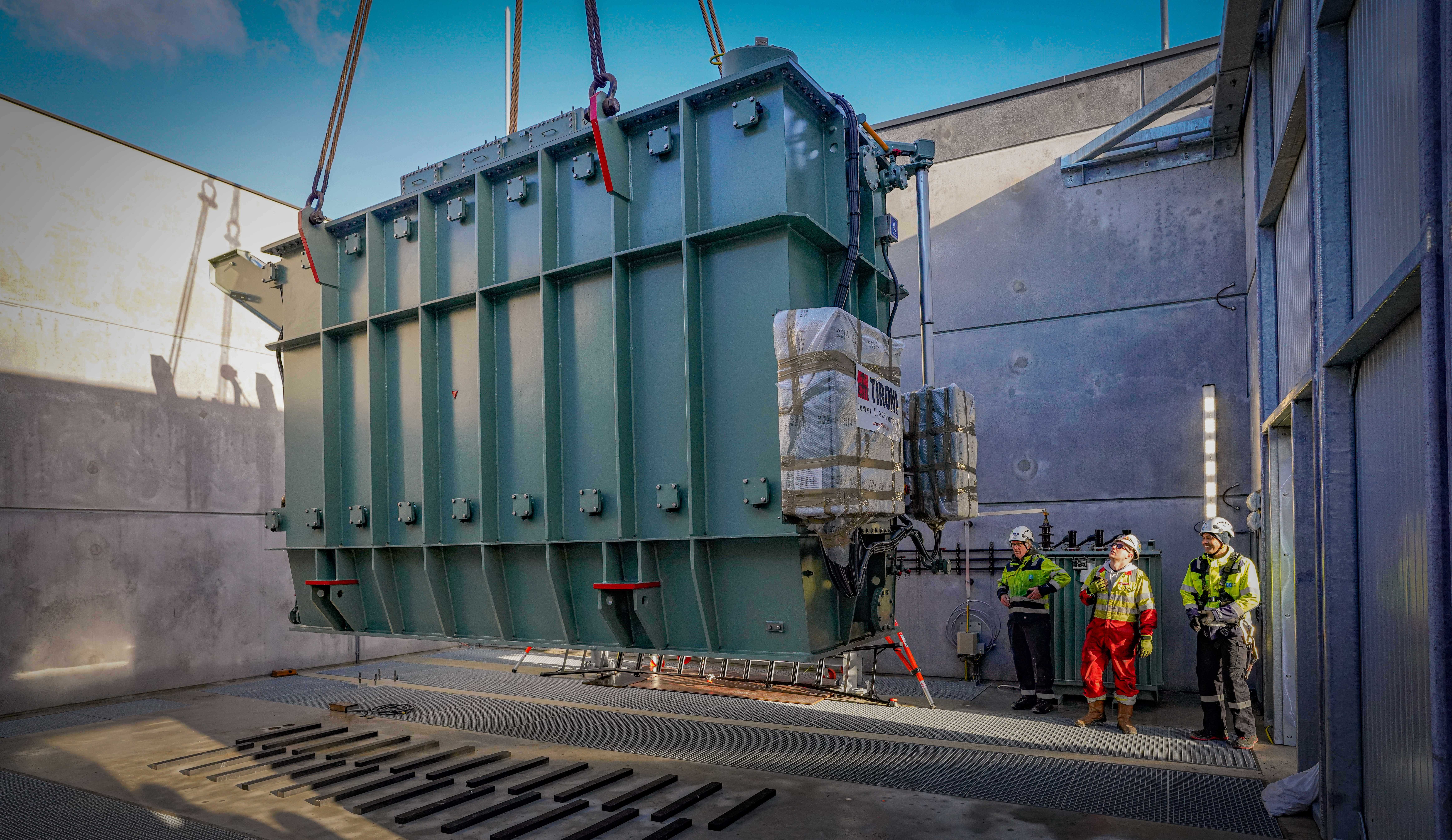
In the first half of 2026, 977 transformer substations were built or converted and 1,279 kilometres of cable were laid. A total of 70 kilometres of new gas pipeline were installed, primarily to replace existing pipelines and to ensure the gas grid remains safe and reliable. Arrangements were made with 147 companies for them to temporarily change or reduce their electricity consumption during periods of peak demand. In the first half of the year, 1,163 megawatts of grid capacity were added. In total, there were 8,900 companies on the waiting list at the end of the first half of the year.
Lessons from experience
The fact that the waiting list for high-volume consumers has shrunk shows that the combination of expanding the grid, smarter use of available capacity and flexibility works. Experience gained over the past few years shows that the existing grid capacity can often go much further than is assumed. Working with companies to better balance energy supply and demand, smarter spreading of consumption throughout the day and reducing peak demand will create additional space on the power grid. This approach benefits not only high-volume consumers, but also creates opportunities for households and small businesses. This way, we will be able to help more customers than initially seemed possible.
This same approach is now also increasingly used for consumers. Network operators and energy providers are working on solutions where devices for households, such as heat pumps, home batteries and charging stations, temporarily consume less power during periods of peak demand and consume more power when there is capacity available on the grid.
Conditions for further acceleration
The half year results show that Alliander’s approach makes a real difference for customers. At the same time, it also gives us a keen understanding of what is needed to further scale up this approach to give even more customers access to the power grid sooner.
To be able to get as many customers as possible onto the grid, flexibility and controllability need to be integrated into policy and regulations as standard. Making smart use of hybrid or regular heat pumps, charging stations and batteries the norm, for example, will allow more consumers and businesses to use the power grid. In some areas, district heating networks also offer a good alternative. However, without appropriate financial enabling conditions put in place by the Dutch government, the required scale-up will not materialise. Finally, it is crucial that authorities contribute to the acceleration by designating sufficient locations for energy infrastructure and minimising permitting and nitrogen emission procedures.
A proportion of the customers still on the waiting list depend on the capacity available on TenneT’s national high-voltage grid. Close collaboration will lead to better utilisation of existing grid capacity, create additional capacity and reduce peak loads.
Maarten Otto: ‘We are continuously working to create more space on the grid. The results show that our approach works: we expand where necessary and we make smarter use of the grid where possible. At the same time, however, we cannot do everything everywhere at the same time. This also means disappointment in areas where customers face a longer wait. While we have scaled up significantly over the past few years, we are now seeing that further acceleration will only be possible if the enabling conditions for network expansion and flexible energy use are also brought into line. Here at Alliander, we are doing everything we can in partnership with authorities, market parties and other network operators to make this next step possible.
Half-year financial results
In the first half of 2026, €1,088 million was invested mainly in replacing and expanding the gas and power grid (first half of 2025: €968 million). Alliander’s net profit for the first half of 2026 came in at €148 million (first half of 2025: €127 million). Operating income for the first six months of this year totalled €1,751 million (first half of 2025: €1,641 million). Cash flow was negative and amounted to €708 million in the first half of 2026 (first half of 2025: €693 million). All amounts stated are exclusive of exceptional income items.
For more details, download Alliander’s 2026 half-year report.