Our impact
on the world of tomorrow
Progress is often measured by figures such as growth, the number of kilometres of power cables laid, the number of contracts signed, and our customer satisfaction rating. But progress is more than that. It is about how people live, work and pursue personal development. About the quality of our living environment. And about whether what we do today will still be the right thing to do tomorrow. This is why we at Alliander take a broader view. After all, energy is not an end in itself. It is an enabler that allows us to contribute to a sustainable and socially equitable future.
From energy
to general prosperity
The energy transition impacts everyone. Households, businesses, neighbourhoods and nature. Every single choice we make during this transition has consequences for the climate, for the space in our living environment, and for how fairly the transition to sustainable energy will unfold.
Here at Alliander, we are guided by the principle of ‘general prosperity’. This means that we do not measure progress solely by economic value but also by the impact on people and nature. It also means that we prevent problems from being passed on to future generations or dumped on other parts of the world. It is this principle that guides our choices towards making a contribution to a sustainable, fair and future-proof society.
The impact of our work
day after day
While it may sound like a lofty, abstract concept, general prosperity actually begins with the work we do every day. This is because everything we do has an effect on our society in both the short and the long term. That’s what we call ‘impact’.
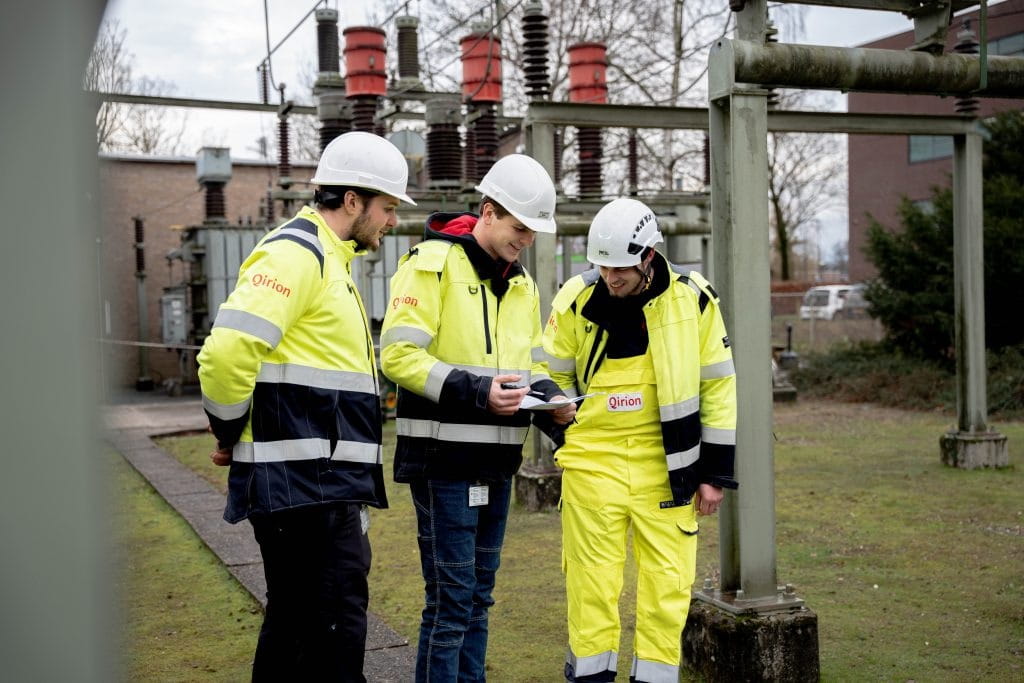
By expanding and adapting the power grid, we are paving the way for greater use of energy from renewable sources. This will, in turn, help curtail climate change and future-proof our energy supply.
Local generation of renewable energy, such as solar and wind, is rapidly driving up demand for and supply of energy. We are all both consuming and generating more energy. It is important to us to keep in close contact with all our stakeholders. We are also committed to maximum transparency and collaboration with the energy-producing parties on the other side of our connections. We publish detailed reports on the course we are taking, on the choices we have made, and on the dilemmas we come up against. And, where possible, we seek input from our stakeholders to guide our strategic choices.
We are facing the major challenge that is the energy transition and implementation of the climate agreement. This requires major investment in our grid. Thanks to our use of smart technology, we are increasingly effective in responding to changing levels of supply of wind and solar power.
What would be even better, however, is if we were are all able to better balance our energy use with the available supply. We are all using more and more energy, have gotten used to having energy available, and we expect it to always be available. This does, however, come with high costs for society.
The climate is changing rapidly, so much so that it is becoming increasingly hard for plants, animals and people to adapt. As a company, we want to run our business within the planetary boundaries of what is sustainable. With this in mind, we have set out to minimise carbon emissions and are building a circular organisation, along with our commitment to fostering biodiversity in the regions in which we operate.
Never before has the importance of social connection been so clear as it is now. By empowering our employees to do volunteer work alongside their job at Alliander, we contribute to both social connection and our employees’ well-being. Every year, over 800 Alliander employees volunteer through the Alliander Foundation.
Read more about diversity and inclusion on Werkenbij.alliander.com (in Dutch)
Nature scarcity and climate change will increasingly manifest in additional risks and costs to society. Green investments and sustainable organisations are less exposed to risk and financially more highly valued. Alliander boasts one of the lowest risk profiles in its industry. This further strengthens our credentials as a sustainable organisation.
Socially responsible
procurement
Also when it comes to procurement, we at Alliander look beyond price and quality. We are working with our suppliers to make our procurement as sustainable and responsible as possible, with consideration for the climate, circularity, fair working conditions and social impact. We are reducing our carbon emissions, use resources efficiently and ensure that our value chain contributes to an inclusive society. This is how we are making an instant impact through our procurement practices.
An opportunity
for everyone
The energy transition is a major and highly complex challenge. It calls for collaboration, creativity and broad engagement. To foster all three, Alliander provides ample room for different skills, ideas and backgrounds. This kind of room for diversity and inclusion leads to better informed decisions, greater innovation capability, and a stronger connection with society. But it is about more than that for us: we also consider it our responsibility to offer a work environment where everyone feels welcome, safe and appreciated. Everyone must have the opportunity to participate and develop.
Read more about diversity and inclusion on Werkenbij.alliander.com (in Dutch)
Our
carbon footprint
In order to combat climate change, we are working to cut greenhouse gas emissions such as CO2. We are, for example, investing in more efficient grids, renewable energy, energy-efficient offices and a fleet consisting entirely of electric vehicles. These are actual and targeted steps we are taking towards low-carbon operations. By having our climate targets for 2030 validated by the Science Based Targets initiative (SBTi), we are showing that our ambition is backed by science and complies with the Paris Climate Agreement.
Circular
network operator
When it comes to the materials we use, 90% of our waste is currently reused. Our aim is, obviously, to reach a recycling rate of 100%. We want as little as possible of what we use to be wasted. In addition, we procure as many of our materials as possible with circularity in mind. Currently, 7.5% of our procurement is circular.

Open about
our impact
The impact of our choices is not always clear-cut. Our choices involve trade-offs between time, affordability and sustainability. Or between various interests in society.
That’s why we are committed to being transparent on the choices we make. We measure our impact and report on it in our annual report every year. This is how we keep learning, improving and engaging, both with each other and with our environment.
More information
Want to find out more about how we pursue general prosperity? Please contact Koen Eising.